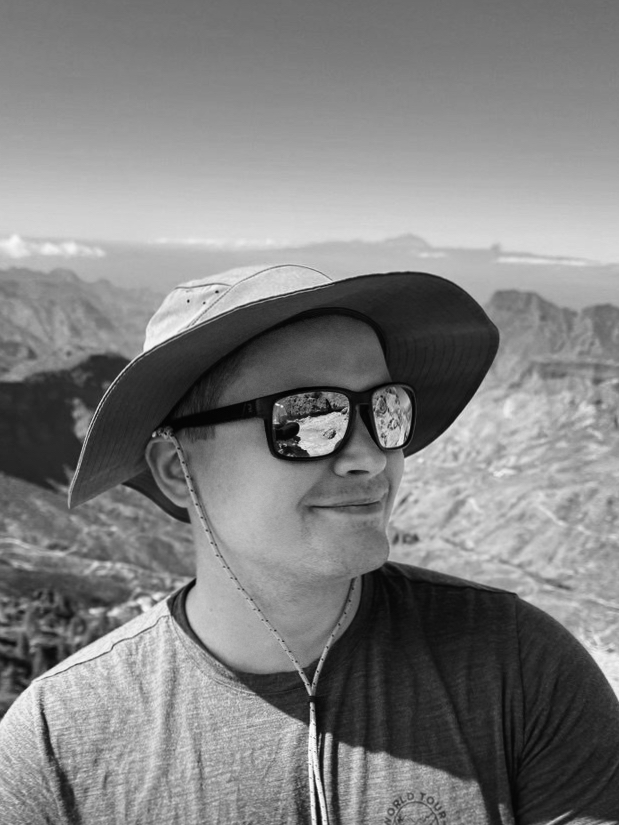
Stanislav Stefaniuk
I'm a Senior Product Designer based in Wrocław, with 7+ years shaping enterprise SaaS products across digital adoption, biotech, governance, and ERP.
The problems tend to repeat: complex systems, unclear ownership, and a gap between what gets designed and what actually ships.
My work focuses on closing that gap.
I get involved early — before problems are fully defined — and stay through implementation. Not just handing off mockups, but working as part of a tight Discovery Trio with Product and Engineering, where decisions are made together, not passed along.
I believe great design is quietly effective — solving real problems, telling clear stories, and creating lasting impact without unnecessary noise. Every element has a job to do.
Lately, I've been exploring where AI actually adds value in design workflows — not in surface-level generation, but in research synthesis, rapid prototyping, structured handoff - the parts that remove friction and help teams move faster.
Experience
Userlane is a Digital Adoption Platform for enterprise SaaS. I owned the content authoring side — the Editor where teams build in-app guides, tooltips, and flows that help end-users navigate complex applications.
Over two years I shipped a range of features: Rich Text Formatting, Active Validation, Tasks, Contextual Actions, and two AI-powered ones — a Refine Text control for guide creators and an AI Assistant that helps end-users find guides and get answers without leaving the app.
Most of this work happened as part of a Discovery Trio with Product and Engineering. I collaborated closely with the Dashboard designer and Design System designer — our features had to hold together across both product segments, so alignment was constant.
Toward the end, I led the redesign of the Refine Selector panel — a technically dense part of the Editor — validated through Customer Success interviews before touching Figma. That project also kicked off our first real AI workflow: using Claude to synthesize feedback, generate lo-fi prototypes, and draft structured handoff specs for engineering.
QIAGEN builds instruments and software for biotech labs worldwide. I led UX for QIASPHERE — the application labs use to schedule and monitor experiments remotely.
Most of my time went into restructuring the Figma architecture so design and engineering could actually communicate, and into on-site interviews with subject-matter experts to ground decisions in how labs actually operate. I delivered hi-fi prototypes for usability validation across critical user journeys, and supported the team through mentorship and shared UX standards.
iDeals is a virtual data room and governance product for mid-market companies. I owned design for the document library and meeting notes — core modules of the multiplatform application across Web, iOS, and Android.
The biggest shift on this team was methodological: I introduced Object-Oriented UX, moving us from flow-first to objects-and-actions modeling, which saved roughly a month of rework on a major release. Alongside that, I ran continuous discovery with two primary personas, extended the LUI design system across all three platforms, and mentored junior designers.
Infor is a global ERP provider. I joined as the team's first dedicated product designer for one product line, where I defined the UX strategy and started the first structured user-research programme.
The core deliverable was a design system audit — methodology, execution, and a phased remediation plan that the team could actually act on. Outside of that I mentored a junior designer through structured Figma and methodology guidance.
Three years of consulting work across clients in Europe, the US, and the UAE. The projects ranged widely — a mobile redesign that grew its audience by 27%, a responsive web portal for an anti-stroke non-profit that drew in younger readers, an iOS dashboard for a security system, navigation work for a UAE financial holding's mobile app.
What held it together was design system discipline — keeping continuity across multiple concurrent product tracks, often with different teams, was where I learned how systems work in practice.